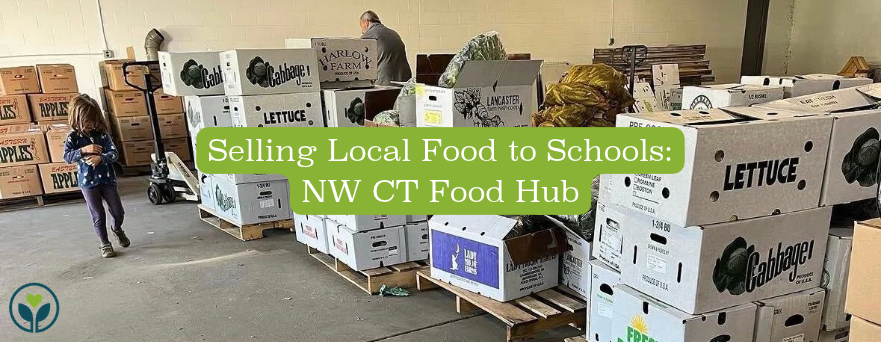
Schools and food pantries can be some of the steadiest customers a food hub or farm will ever have. The volumes are bigger than a farmers market, the orders repeat week after week, and the money usually comes from a budget that’s already set aside for food. The catch is that getting in the door looks nothing like signing up a restaurant or a CSA member. Food service directors have procurement rules, food safety requirements, and tight per-meal budgets, and before they take a chance on a new supplier they need to know the product will show up every week at a price that fits.
The short version: selling local food to schools and pantries takes patient relationship building with food service directors, price points that work for the buyer and the farmer, traceability that shows you’re food-safety ready, forecasting that lines up with crop planning, and clear accounting for prepaid and grant-funded purchases. Here’s how one food hub did it.
Renée Giroux, Executive Director of the Northwest Connecticut Regional Food Hub, has been working through all of that since the hub’s second year. She founded the hub nine years ago and started exploring farm-to-school in year two. It took a good two years of relationship building to get a real program going with a single district. Today the hub sells to more than 60 public schools across Connecticut, along with food pantries, healthcare providers, and community organizations. Here’s some of what she’s learned along the way, and what she’d tell anyone thinking about going after institutional accounts.
Join our upcoming webinar with the food hub that grew from one school district to 60+
Save Your Spot!Price is the first objection, and it's solvable.
Most institutions assume local food will cost far more than what they’re paying their broadline distributor. Renée’s hub sat down with farmers and food service directors together and landed on price points both sides could live with. Part of the answer was leaning on crops farmers were already growing in surplus, which let them bring the per-pound price down without anyone losing money. Once the first district had a working program with real numbers behind it, the next conversation got a lot easier.
Traceability is how you prove you're a real partner.
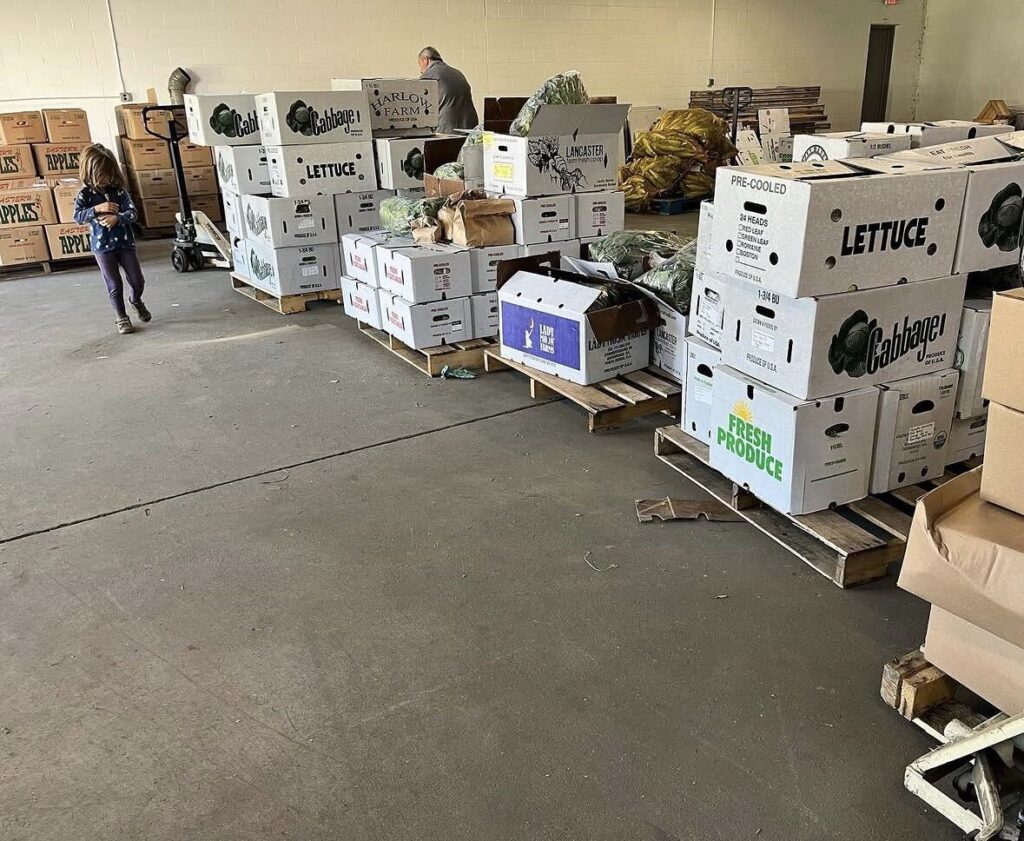
Larger institutional buyers require lot tracking and a recall plan, but Renée’s point is that it’s worth doing whether or not anyone requires it. Knowing when every case came in and went out means you can trace a complaint back to its source, and it tells a buyer you take the account seriously.
“We've gotten to the point where we're not showing up with a pickup truck and a bushel of apples. We have all of it in place.”
— Renée Giroux, Executive Director, Northwest Connecticut Regional Food Hub
Forecasting is the hard part.
School calendars and crop plans don’t line up on their own. Getting districts to commit to volumes early enough for farms to plan next season’s plantings has been one of the hub’s biggest ongoing challenges, and it’s one they’re still refining every year.
Prepaid agreements and grant credits keep everyone clear on where they stand.
The hub uses pre-purchase agreements with schools: the money comes in up front, goes on the buyer’s account as credit, and gets drawn down over the season. They do something similar with LFPA dollars for food pantries, putting each pantry’s allotment on its account so the pantry and the hub always know what’s left. It’s the same need LFM’s pre-orders module was built for: giving institutions a way to log in and place orders for weeks ahead, so the hub can plan around real commitments instead of estimates.
 Join Us
Save Your Spot
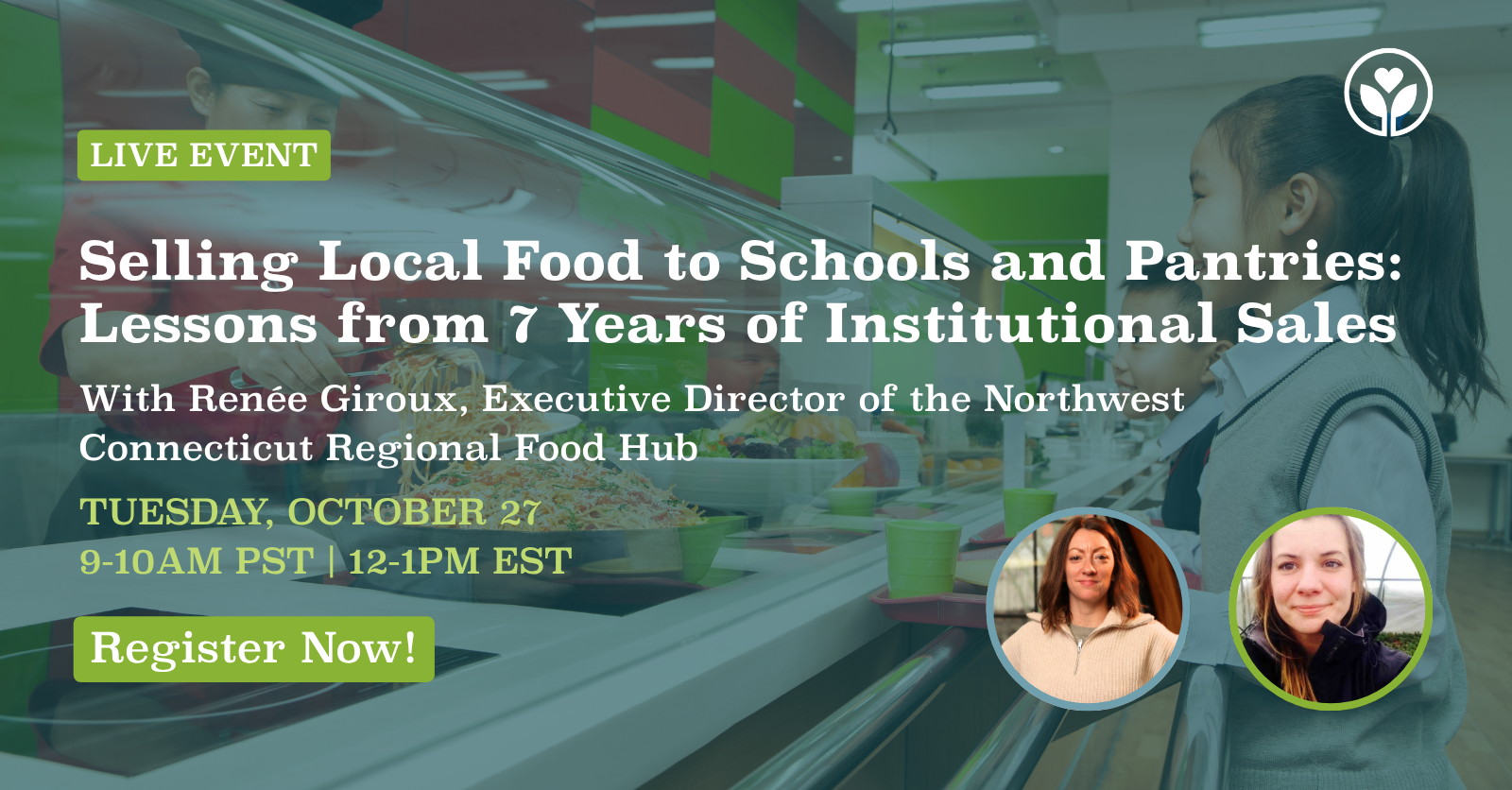
Renée is joining us for a live webinar to go deeper on all of this, including a look at the pre-orders module and 15 minutes for your questions. If you're a food hub, co-op, farm, or distributor thinking about selling to schools or pantries, or already doing it and trying to make it less of a juggling act, this one's for you. Can't make it live? Register anyway and we'll send you the recording. And if you want something to work from in the meantime, our institutional sales toolkit is a good place to start.
Live Session | 15m Q&A | Recording sent to all registrant
Renée Giroux is the Executive Director of the Northwest Connecticut Regional Food Hub. She has more than 20 years of experience in horticulture, sustainable agriculture, and local food systems. She founded the food hub nine years ago, and today it connects small and mid-sized farms with schools, healthcare providers, food pantries, and community organizations across Connecticut through Farm-to-School, food access, Produce Rx, and Food Is Medicine programs, plus the aggregation, logistics, and distribution behind them.