
• Home
  • Solutions
    • Solutions for Farms
    • Solutions for Food Hubs
    • Solutions for CSAs
    • Solutions for Networks
    • Support for Online SNAP/EBT
    • Wholesale
    • Local Food Connect
    • Pricing
    • Customer Success Packages
  • About Us
    • Meet the Team
    • Customers
    • Career Opportunities
  • Resources
    • Blog
    • News & Events
    • Innovative Sales Webinars
    • Level Up with LFM Webinars
    • Case Studies and White Papers
    • Resources for Customers
  • Contact Us

Software for Farms & Food Hubs Call us today! (541) 579-3195

info@localfoodmarketplace.com
Request a Demo
Local Food MarketplaceLocal Food Marketplace
  • Home
  • Solutions
    • Solutions for Farms
    • Solutions for Food Hubs
    • Solutions for CSAs
    • Solutions for Networks
    • Support for Online SNAP/EBT
    • Wholesale
    • Local Food Connect
    • Pricing
    • Customer Success Packages
  • About Us
    • Meet the Team
    • Customers
    • Career Opportunities
  • Resources
    • Blog
    • News & Events
    • Innovative Sales Webinars
    • Level Up with LFM Webinars
    • Case Studies and White Papers
    • Resources for Customers
  • Contact Us

Access the Institutional Markets Toolkit

Home > Access the Institutional Markets Toolkit

Free toolkit for food hubs and farms

Will that school account actually make you money?

The scale is real: K-12 schools alone spent an estimated $1.8 billion on local food in 2022 to 2023. But the costs of becoming a vendor land before the first order does, and most operations do not run those numbers until year two.

We put together three tools to help you navigate breaking into institutional markets.

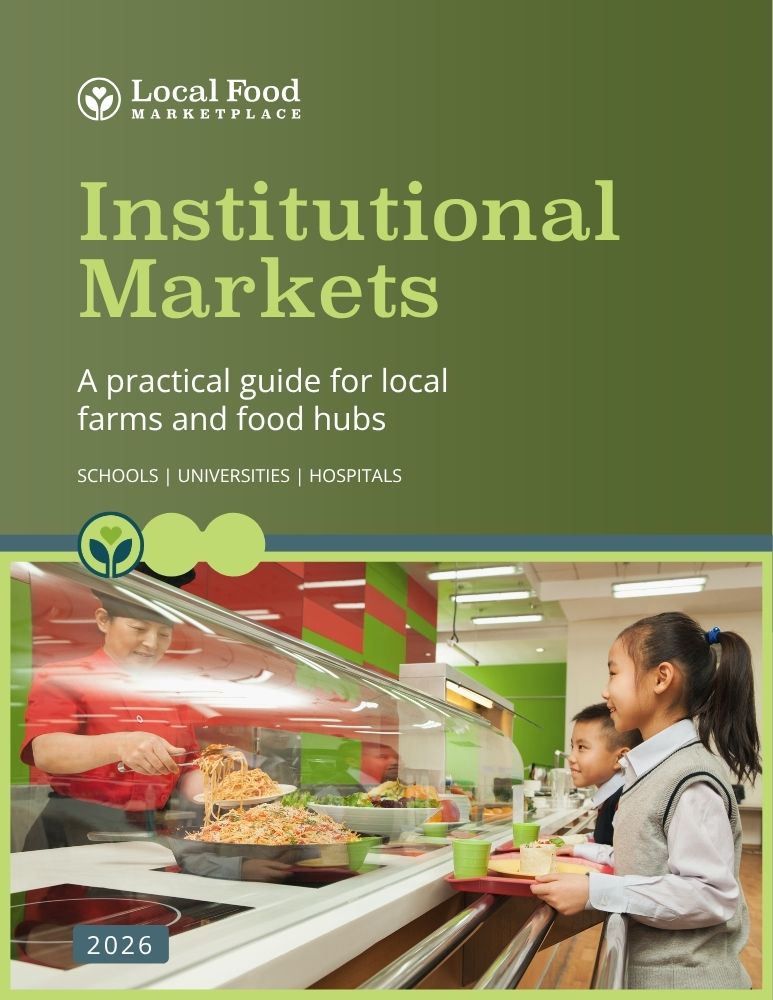
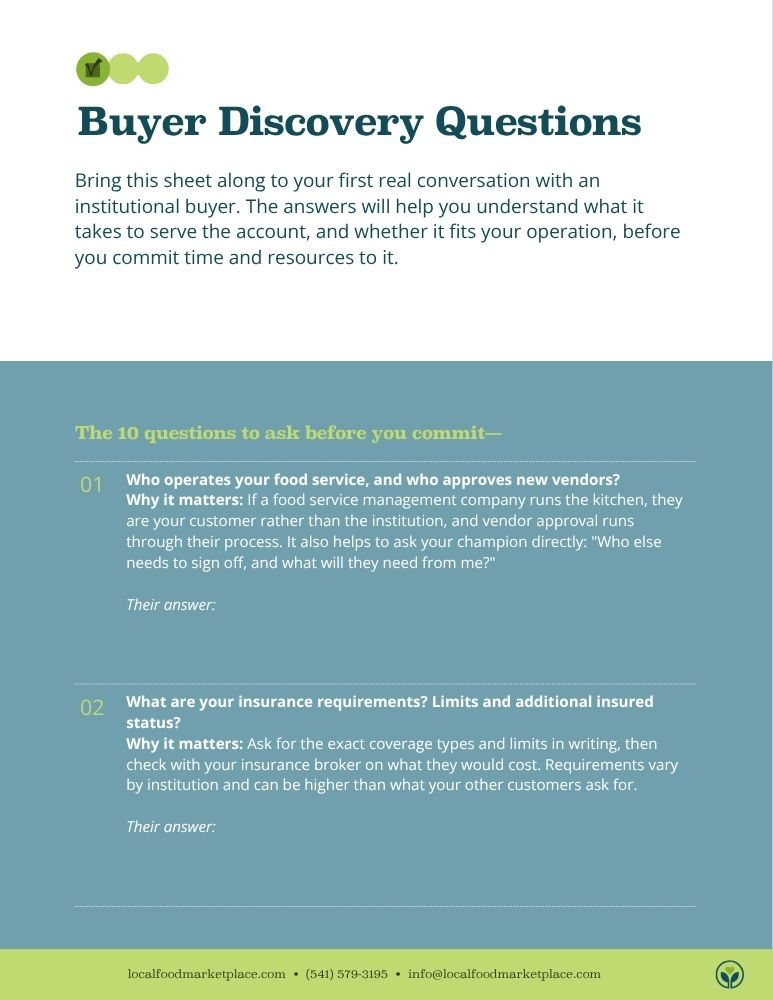
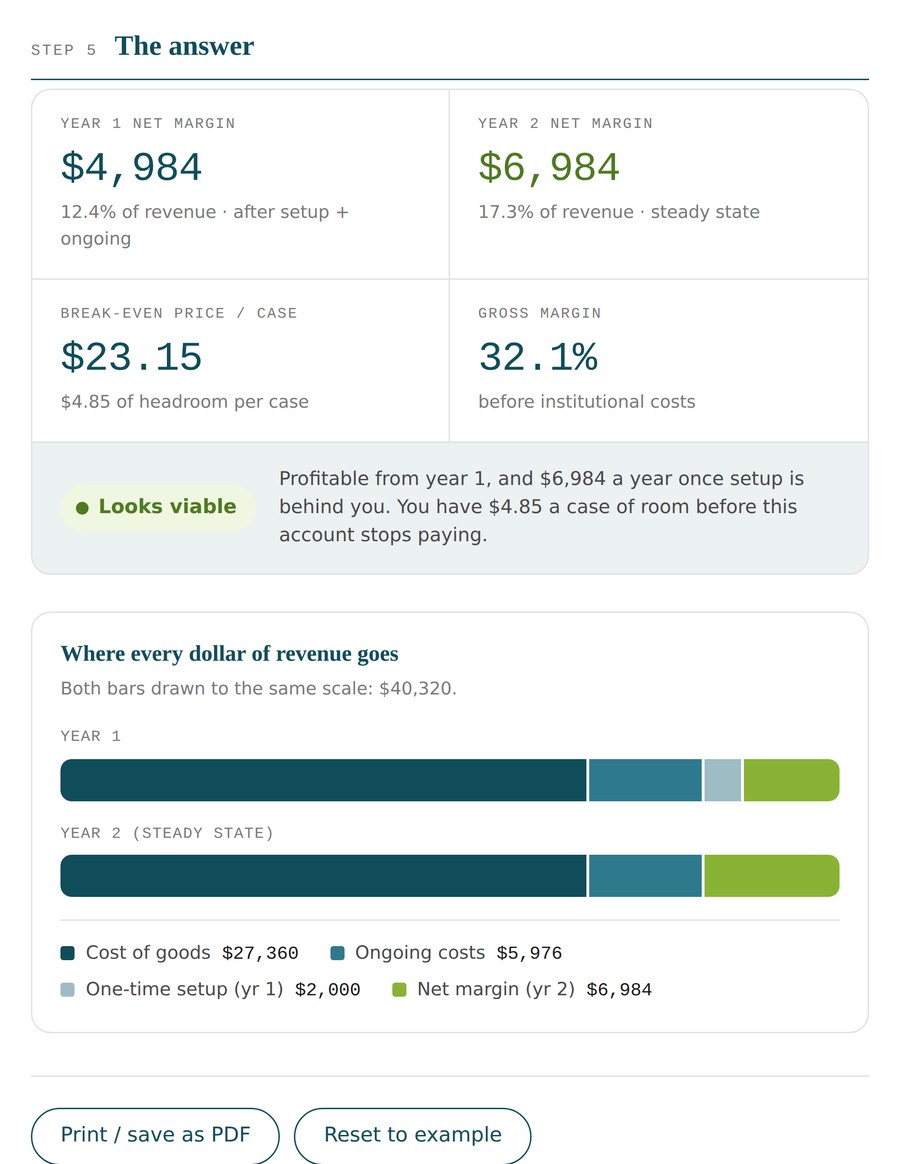
Cover of Institutional Markets, a practical guide for local farms and food hubs First page of the Buyer Discovery Questions sheet The Institutional Readiness Calculator showing year one and year two net margin, break-even price, and a viable verdict
What you get

Understand the buyer, ask the right questions, then run the numbers

The three pieces work in order. Read the guide to understand institutional buying, take the question sheet into your first meeting, then put the answers into the calculator before you commit to a price.

01
Understand

Institutional Markets: a practical guide

Eleven chapters on how buying works across schools, universities, and hospitals, written from the seller’s side: the money, the paperwork, the logistics, and the relationships.

  • What it really costs to become a vendor, and why those costs land before the first order
  • A readiness checklist, plus how schools, universities, and hospitals each buy differently
  • Pricing, products, and margins by channel, and forecasting supply against a menu calendar
  • Hub networks, brokers, and processing partners that reach contracts none of you could serve alone
  • Winning the account, then keeping it: delivery, getting paid, and producer level reporting
49-page PDF
02
Ask

Buyer Discovery Questions

Ten questions to bring to your first real conversation with an institutional buyer. Each one explains why it matters and leaves space to write their answer, so you walk out with what you need to price the account.

  • Who actually operates the food service, and who signs off on new vendors
  • Exact insurance limits and additional insured status, in writing, so your broker can price them
  • Which certification they accept, since USDA GAP, Harmonized GAP, and GFSI are different audits
  • Receiving hours, how many delivery points, and whether their kitchen can use whole product
  • Payment terms, local purchasing goals and funding, the menu planning horizon, and the bid cycle
Printable PDF, 10 questions
03
Decide

Institutional Readiness Calculator

Take the answers from the question sheet and run the whole calculation, with real quotes rather than estimates. It separates the one-time cost of getting ready from the costs you carry every year, which is the distinction that makes a promising account look profitable when it is not.

  • Your net margin in year one, and again at steady state once setup is behind you
  • The break-even price per case at your volume, so you know your floor before you negotiate
  • A plain verdict: viable, an investment year that pays later, or not worth it at this price
  • A printable summary you can take to your team, your board, or your lender
  • The companion to the readiness checklist in Chapter 1 of the guide
Online calculator
Get all three

One form. You will land straight on a page with the guide, the question sheet, and the calculator.

"*" indicates required fields

Name*

Who this is for

Built for the people doing the selling

Food hubs

Weighing a district or health system contract against what you pay your producers.

Farms selling direct

Looking at a school, college, or hospital account as your next step up from wholesale.

Anyone mid-negotiation

Sitting on a target price from a buyer and needing to know whether you can say yes to it.

Get all three

Find out before you sign, not in year two

Read the guide, take the questions to your first meeting, then put the answers into the calculator. A few hours of work, spread across the weeks before you commit. If the account pays, you will go into the negotiation knowing your floor. If it does not, you will know that while walking away is still easy.

Access the toolkit
Experience a better business. Get Started Today!
Logo
Est. 2009
Robust, flexible sales and distribution software for farms, food hubs, and markets. Get started today.
© 2026 — Local Food Marketplace
Join Our Email List
Review Our Privacy Policy

Contact Info

  • Local Food Marketplace
  • PO Box 1314 Eugene, OR 97440
  • 1 (541) 579-3195
  • info@localfoodmarketplace.com

Customer Support

Fresh from the blog

  • Selling Local Food to Schools: How One Food Hub Grew from One District to 60+ Schools
  • Give Every Customer Group a Storefront of Their Own
  • Dave Prather: 17 Years Running a Food Hub, Now at LFM
  • “Local Food Marketplace Taught Us How to Be a Food Hub”
  • 4 Email Marketing Updates Every Farm and Food Hub Needs in 2026
  • Why We’re Changing Our Pricing

Our Customers