Whether you’re running a farm, managing a food hub, or both, you keep track of your numbers. But keeping track and having true financial visibility are two very different things.
Most of the operations we work with aren’t struggling because they’re bad at business. They’re struggling because a few key numbers are hiding in plain sight. We sat down with Alex Edquist (Co-founder and CEO) and Reba Liddy (Marketing & Sales Manager) from Good Agriculture, who’ve worked with CSAs, food hubs, and diversified farms across the country, to identify the patterns that quietly drain revenue. Here are the three blind spots they see most often, and how to fix them.
Join Good Agriculture and Local Food Marketplace on April 28th for a free live webinar on farm and food hub financial management.
Save Your SpotYour overall numbers look fine, but parts of your operation are quietly losing you money
A profitable-looking operation can mask a lot of unprofitable activity underneath. The problem is that most operations look at revenue as one number, and one number can’t tell you which parts of your business are pulling their weight and which aren’t.
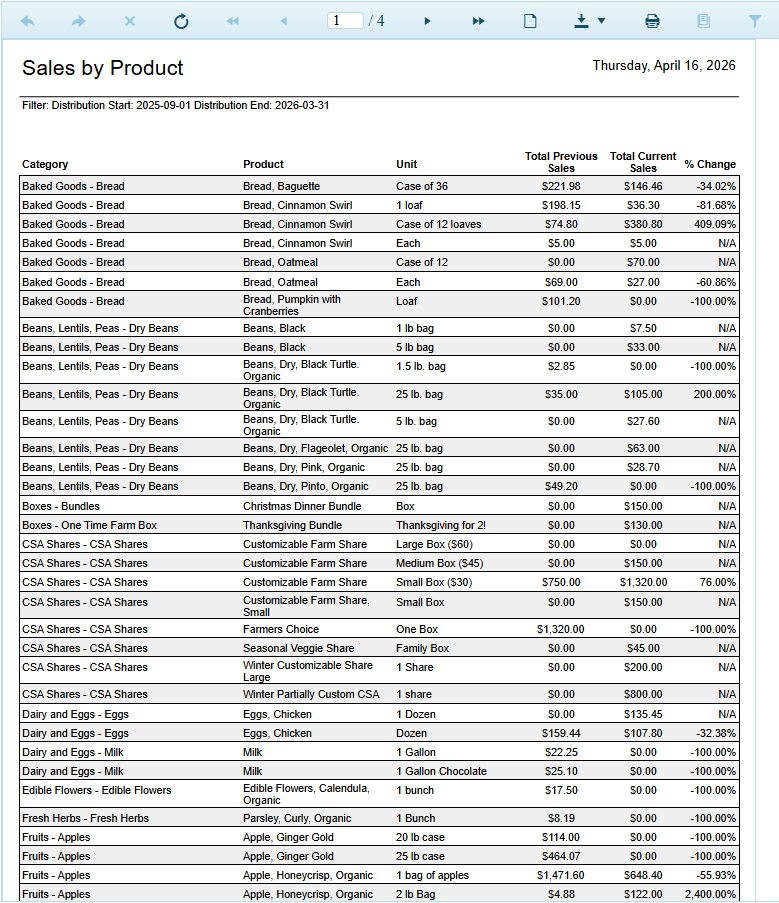
For farms, the right lens is usually the product or enterprise level. If you grow 10 to 20 crops, you can and should know the margin on each one. You might be spending serious time, soil, and labor growing cabbage, only to find out at year’s end that you sold $200 worth of it. That kind of answer requires product-level data flowing cleanly into your books.
For food hubs, tracking at the individual product level isn’t practical. Many hubs carry thousands of SKUs, and mapping every product to your books would create more complexity than clarity. The recommended approach is to set up your LFM and QuickBooks integration at the category level. That way, sales data flows into QuickBooks organized by product category, and you get meaningful visibility in both platforms without an unmanageable bookkeeping structure. Is your produce category generating enough margin to justify the handling? Is a particular sales channel worth the overhead? With a category-level setup, both LFM and QuickBooks can help you answer those questions.
In both cases the blind spot is the same. You have more visibility available to you than you’re using, and the fix is making sure your data is clean enough to trust what the reports are telling you.
For farms, set up item-level tracking in your sales platform so data flows into QuickBooks by crop or enterprise, seeing $20 of cabbage and $50 of tomatoes, not just “$120 in sales.” For food hubs, set up your LFM and QuickBooks integration at the category level. This gives you clean, organized data in both platforms without the complexity of mapping thousands of individual products to your books.
Local Food Marketplace’s reporting suite lets farms slice performance by crop or product, and lets food hubs analyze sales by category and channel in both LFM and QuickBooks. Setting up the integration at the category level means you get meaningful financial visibility across both platforms without an unmanageable bookkeeping structure.
You look profitable on paper, but you’re about to run out of cash
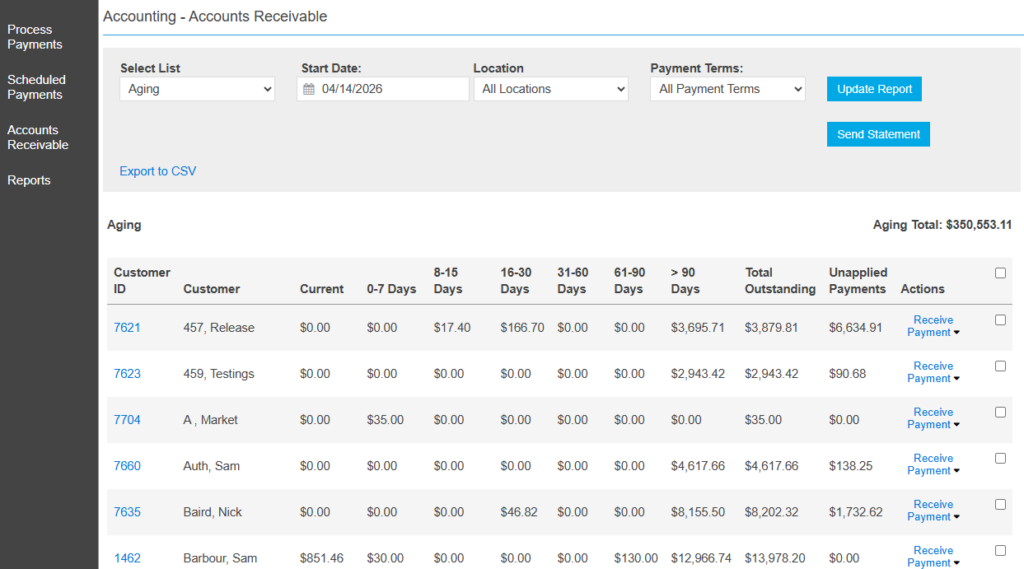
Profitability and cash flow are not the same thing, and for farms and food hubs that gap can be dangerous. On the farm side, early-season investments in seeds, fertilizer, labor, and equipment repairs can run well ahead of sales. On the food hub side, you may be moving a high volume of product while a backlog of unpaid invoices quietly hollows out your cash position.
In both cases, you can look profitable on paper while your bank account tells a different story. Stacked receivables are one of the most common reasons food hubs run into cash crunches despite healthy sales numbers. And farms that don’t model cash timing through the season often find themselves short at exactly the wrong moment.
Understanding the difference between cash basis and accrual accounting matters here too. A CSA operation that receives prepayments has collected cash before earning the revenue, which can create a misleading picture if you’re not tracking it carefully.
Build a cash flow model that accounts for timing, not just totals. Know your cash position week by week through your busiest seasons. Stay on top of receivables: outstanding invoices aren’t revenue until they’re paid. And before any major purchase or expansion, run scenarios so you’re making decisions with accurate numbers, not hopeful ones.
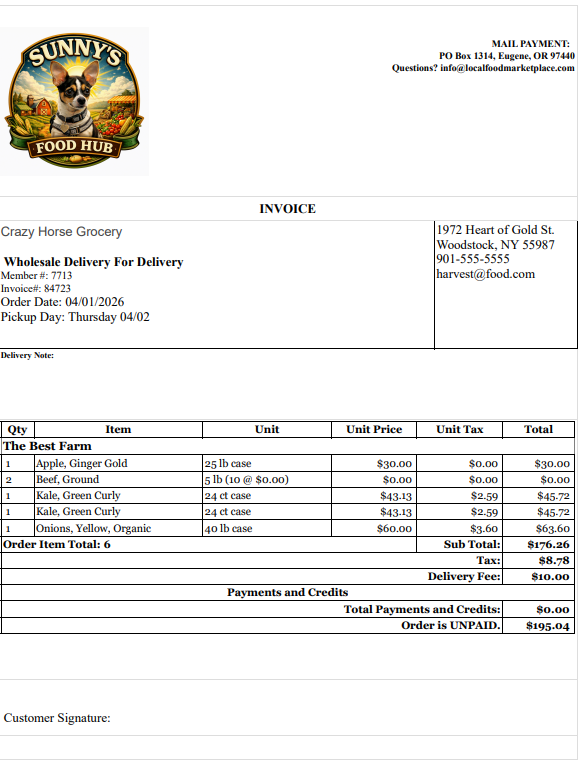
Local Food Marketplace lets you send invoices directly from the platform and track every outstanding, overdue, and paid invoice in a single organized view. Keeping your A/R current means you’ll receive payment faster, and you’ll always know exactly where your cash actually stands.
“You might think you’re keeping track, but what you really want to know is: can I actually expand? And without the right data, you can’t answer that.”
— Alex Edquist, Co-founder & CEO, Good Agriculture
You’re sitting on data that could tell you whether you’re ready to grow, but you’re not using it that way
Most operators feel like they’re keeping track. But there’s a difference between tracking what happened and having data you can actually use to make a major decision: a new piece of equipment, an additional sales channel, a bigger facility, more staff.
When the time comes to think about expanding, too many farms and food hubs are working from gut feel because their financial data isn’t set up to answer that question. The sales history is there. The revenue numbers are there. But if the data isn’t clean, itemized, and organized by product and channel, it can’t tell you which parts of your operation have room to scale and which ones don’t.
This is the blind spot that tends to cost the most over the long run. Not because money is walking out the door today, but because the decision to grow gets made too late, too early, or with the wrong information entirely.
Get your data into a shape where it can answer forward-looking questions, not just backward-looking ones. That means clean, itemized records by product and channel, a clear picture of cash flow timing across seasons, and the ability to run scenarios before you commit. When you can see which enterprises are genuinely profitable and how your cash position holds up under different growth assumptions, expansion stops being a leap of faith.
Growth decisions require complete information. When your sales data syncs cleanly to QuickBooks, your reporting shows what’s actually profitable by product and channel, and your A/R is current so you know your real cash position, you finally have what you need to make that call with confidence rather than guesswork.
The financial tools farms and food hubs actually need
Every one of these blind spots is fixable, and Local Food Marketplace is built to help you fix them. Here’s how our platform supports better financial management for farms and food hubs:
Robust Reporting
Sales, distribution, and performance data, analyzed easily so you can run a stronger business.
QuickBooks Integration
Sync clean, itemized sales data directly to QuickBooks Online. No manual exports, no lump sums.
Invoicing & A/R
Send invoices from the platform and keep all your accounts receivable organized in one place.
Getting these pieces in place doesn’t require a finance degree or a full-time bookkeeper. It requires the right systems, set up correctly, and a platform built around how farms and food hubs actually operate.
 Free Webinar
From Sales to Strategy: Smarter Financial Management for Farms & Food Hubs
Join Good Agriculture and Local Food Marketplace for a free live session on turning your financials and sales data into decisions you can act on. Covering cash flow, QuickBooks integration, profitability by enterprise, and more. Free to attend. Bring your questions.
Free to attend | Live Q&A included | All operation types welcome
Farm and food hub accounting FAQ
What are the most common accounting mistakes farms and food hubs make?
The three most common accounting mistakes are: not tracking profitability by individual product, crop, or sales channel, so unprofitable enterprises go unnoticed; confusing profit with cash flow (an operation can look profitable on paper while heading toward a cash crunch due to unpaid invoices or seasonal timing gaps); and importing sales data as a lump sum rather than itemized line items, which makes it impossible to see what’s driving revenue.
How does QuickBooks integration help farms and food hubs with bookkeeping?
Integrating your sales platform with QuickBooks Online allows sales data to flow automatically into your books, showing exactly which product categories generated revenue, rather than as an undifferentiated total. This eliminates manual data entry, reduces errors, and gives you the granular data you need for accurate financial reporting across your business.
What is the difference between cash basis and accrual accounting for farms and food hubs?
Cash basis accounting records income and expenses when money actually changes hands, making it simpler and common for smaller operations. Accrual accounting records revenue when earned and expenses when incurred, regardless of when cash moves. For CSA operations with prepayments, or food hubs managing large receivables, accrual can give a more accurate financial picture. Consult an accountant to decide which method fits your operation.
How can farms and food hubs use their sales data to make better growth decisions?
Most operations have more useful data than they realize, but it’s only actionable if it’s clean, itemized, and organized by product and channel. When revenue is broken down that way and synced to an accounting tool like QuickBooks, you can see which enterprises are genuinely profitable, how cash flow holds up across different seasons, and whether the numbers support a specific expansion. Local Food Marketplace’s reporting tools are designed to give farms and food hubs that forward-looking visibility, not just a record of what already happened.
How do food hubs manage accounts receivable and unpaid invoices?
Food hubs can manage accounts receivable by using a platform that sends invoices directly to buyers and tracks payment status in one place. Keeping A/R organized prevents the common scenario where an operation looks profitable on paper but is cash-poor because dozens of invoices remain unpaid. Local Food Marketplace includes invoicing and A/R tools designed for both farm and food hub operations.