Moving your wholesale business online is one of the best ways to streamline operations, reduce order errors, and grow revenue. Still, many farmers and food hubs find that getting wholesale buyers to change their ordering habits can be a challenge.
The key is to make the transition simple, clearly explain the benefits of online wholesale ordering, and provide strong support early on. Follow these proven tips to successfully move your wholesale customers to your online ordering platform.
Contact the Local Food Marketplace team today to see how online ordering works!
Book Your Free Demo1. Make Your Online Wholesale Ordering System Easy to Use
The easier your wholesale sales platform feels, the faster buyers will adopt it. Ways to reduce friction include:
- Create a clear onboarding journey on your website that explains exactly how to place an order online. A short tutorial video or a step-by-step walkthrough with screenshots can help buyers feel confident before they even log in.
- Create an FAQ document that answers common customer questions. Keep updating it as new questions come up.
- Set up customer accounts ahead of time so buyers only need to reset their password and start ordering.
- Create recurring wholesale orders for customers who order the same items each week.
- Build Custom Product Lists so each buyer sees only the products that matter to them, such as GAP-certified products for farm-to-school buyers or produce-only lists for grocery stores.
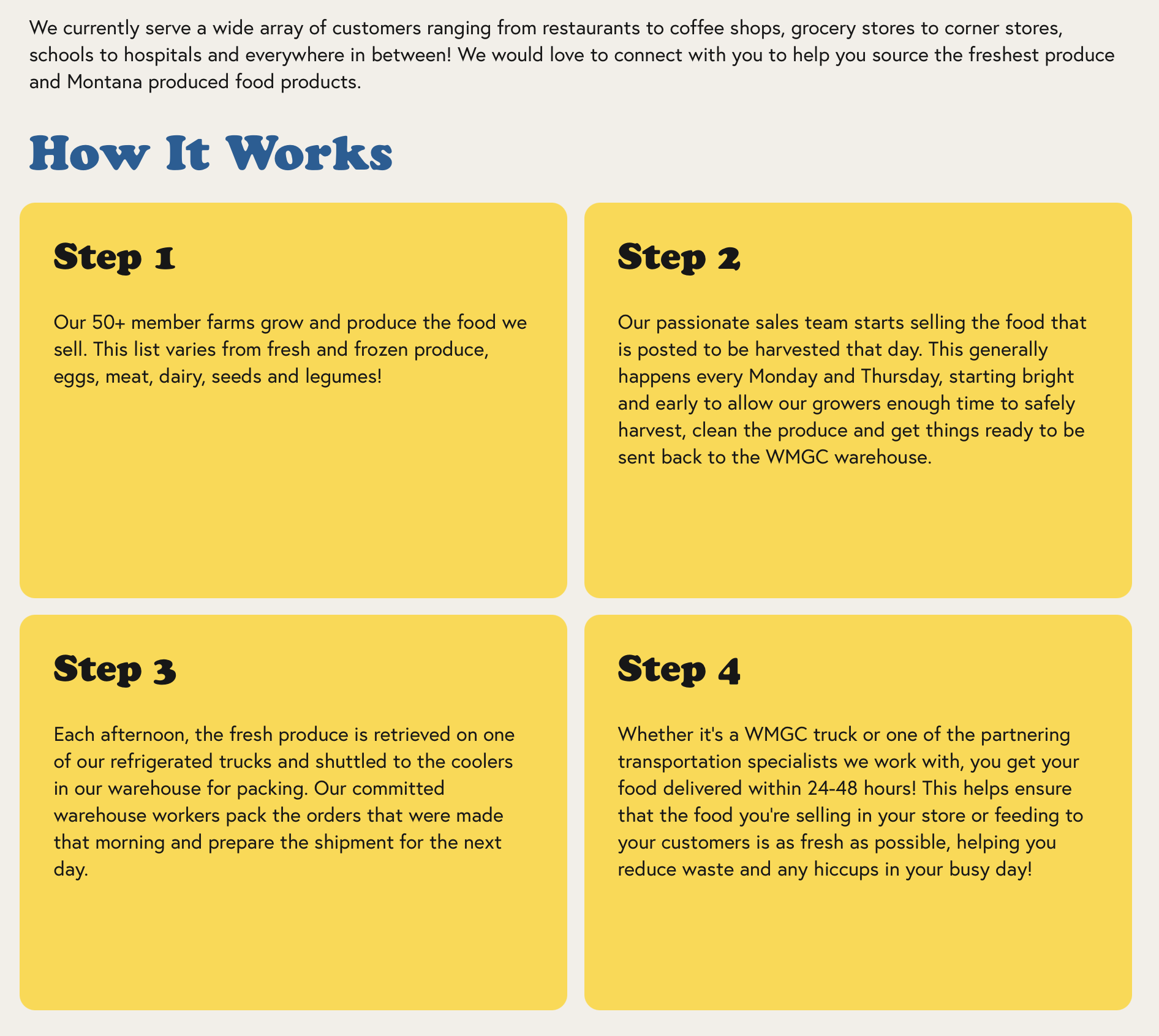
Here’s an example of how an LFM customer, Western Montana Growers Cooperative, explains their wholesale process on their website.
2. Clearly Explain the Benefits of Online Wholesale Ordering
Wholesale buyers are far more likely to place orders online when they understand how it helps them.
When promoting your food hub software or farm wholesale ordering system, consistently highlight these benefits:
- Buyers can edit orders in real time, without waiting for emails or texts.
- All available products, pricing, and inventory appear in one centralized storefront.
- Customers can access product photos, descriptions, and producer information instantly.
- Recurring orders remain editable, making it easy to add last-minute items.
- Order history is saved, simplifying reordering and accounting.
- Multiple buyers from the same business can shop at the same time.
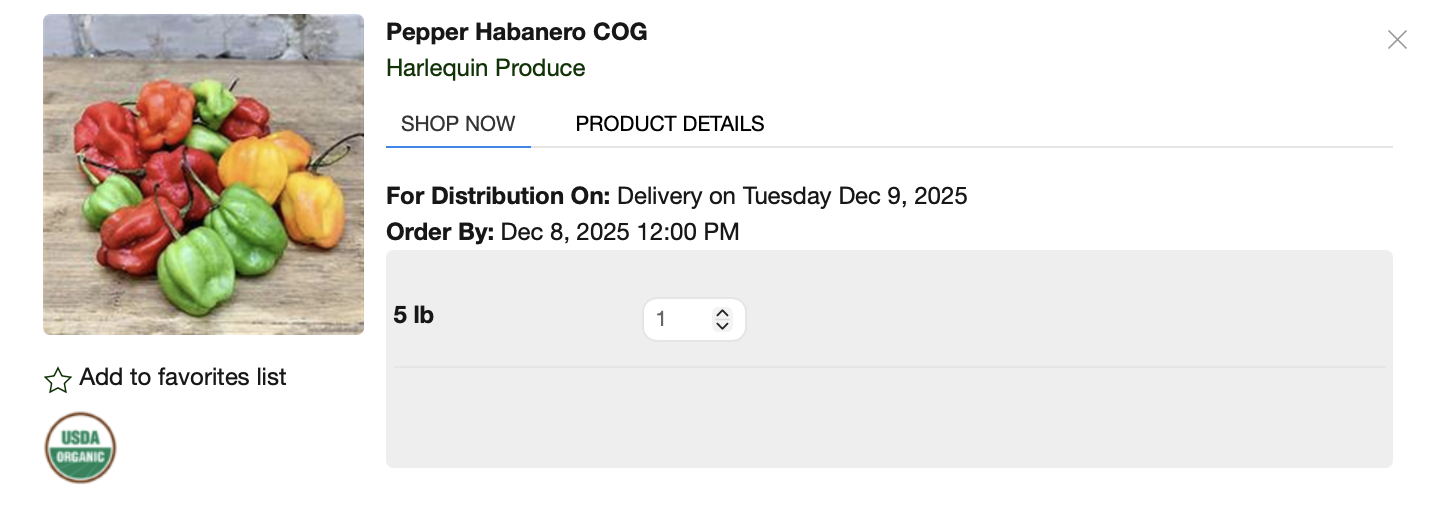
Here’s an example of how Western Montana Growers Cooperative displays their pepper habaneros for sale. The LFM storefront displays the product image, distribution date, order deadline, and USDA certification label. The customer can add it to a favorites list or see how many are still available on the product details page.
We encourage buyers to order online as soon as the store opens. This is their chance to purchase the best products before they sell out.”
—Rachel Kretchmar, OKC Food Hub
3. Provide Hands-On Support When Launching Your Wholesale Platform
Before launching your online wholesale ordering system to all customers, invite a small group of trusted buyers to test it. Offer real-time support and collect feedback to smooth out any issues. This is also a good opportunity to get key questions for your FAQ.
Once you share the storefront with all of your wholesale customers, offer one-on-one help during your next delivery. You can help them get logged in for the first time and build their first order with them.
James Klett, Co-Owner of Fairgrown Farm in New Jersey, has had good luck getting reluctant customers to use the storefront by giving them extra support the first time around. He sets up an account for them, then schedules a time to go through the whole process with them, either in person or online. He recommends they create a recurring order that can serve as a baseline for future orders. Then, every week, they receive an email reminder that contains a link to where they can place that week’s order.
Teresa Kurtak, Co-Owner of Fifth Crow Farm in California, found that creating a standing order worked well for customers who were reticent to begin using the online storefront. Sometimes they just stick to the recurring order, but sometimes they’ll log in to their account and make additions. Being able to modify an existing order rather than creating a new order each week somehow seems less intimidating to them — and it guarantees Fifth Crow Farm a set of ongoing purchases.
4. Keep Communication and Ordering Expectations Consistent
Consistency plays a major role in helping buyers adopt your online wholesale ordering system. When customers regularly see the same links, schedules, and reminders, your storefront quickly becomes their default way to order.
Include your storefront link in weekly fresh lists, order reminders, and delivery confirmations so buyers always know exactly where to go. At the same time, clearly communicate key ordering expectations, including:
- Store opening and closing times
- Order modification deadlines
- Delivery schedules
Clear, consistent communication reduces confusion, prevents last-minute messages, and makes online ordering the most convenient option for your wholesale customers. When using Local Food Marketplace, order deadlines automatically display at the top of the online sales platform, so buyers always know exactly how long they have to place or edit their order.
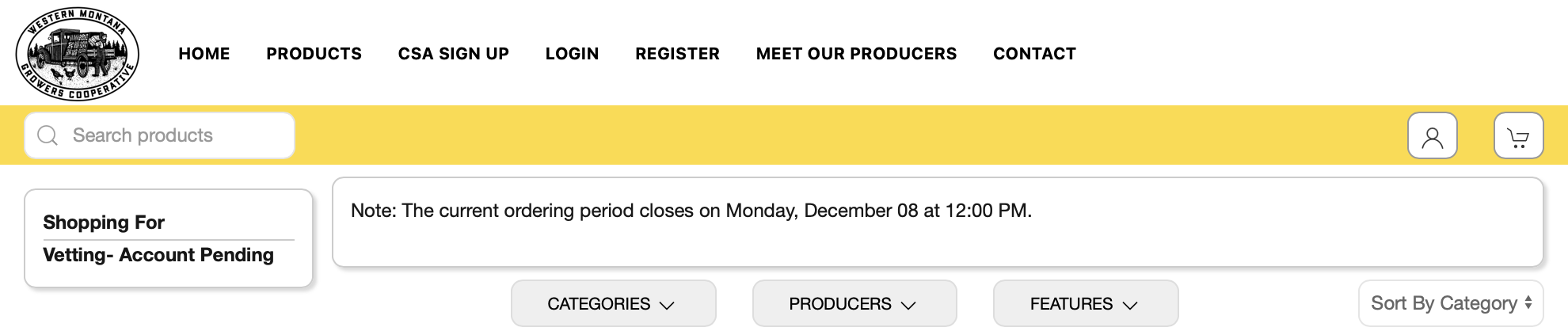
Here you can see how order deadlines are clearly displayed for customers.
5. Use Incentives to Encourage First-Time Online Orders
Sometimes buyers just need a small push to try something new. A simple incentive can motivate hesitant customers to place their first online order and build the habit going forward. Consider offering:
- A first-time online order discount
- Free delivery for digital orders
- A bonus product for online buyers
Even small incentives can make a big difference in adoption.
6. Gradually Phase Out Manual Ordering
As more customers transition to online wholesale ordering, begin limiting phone, text, and email orders. Maintaining two systems creates extra work, increases the chance of mistakes, and slows down your team. A gradual phase-out helps buyers adjust at a comfortable pace without feeling pressured.
Start by directing all new or last-minute orders to the online storefront. Then set a target date for fully moving away from manual ordering and communicate it clearly. This helps buyers build new habits while keeping everyone aligned and reducing confusion.
7. Share Buyer Success Stories to Build Trust
Short testimonials from buyers who already use your online wholesale platform can reassure hesitant customers and normalize the change.
Ready to Simplify Wholesale Ordering for Your Business?
If you’re interested in bringing your wholesale business online, Local Food Marketplace can help! We specialize in building custom online marketplaces that make it easy for customers to shop and provide you with multiple tools to increase sales and make your wholesale business easier to manage. To learn more about how our powerful software can benefit your business, request a free one-on-one demo here.
Contact the Local Food Marketplace team today to schedule your free demo!
Request Your Free DemoFrequently Asked Questions About Online Wholesale Ordering
What is online wholesale ordering?
Online wholesale ordering allows buyers to place, modify, and manage orders through a digital storefront instead of phone, text, or email.
How will buyers know what’s available each week?
Your online storefront shows live availability, producer details, and real-time pricing. Many vendors also send a weekly fresh list that links directly to the storefront. The fresh list is also available via PDF. excel or other common file types that wholesale buyers are familiar with.
What if my buyers usually order the same items every week?
Recurring orders can be set up for them, giving them a convenient baseline order they can modify anytime. This reduces friction and helps build consistent weekly habits.
How do recurring wholesale orders work on LFM?
Recurring orders automatically repeat weekly, bi-weekly or monthly, and can be edited anytime before the order deadline.
What if my buyers aren’t tech-savvy?
It is always possible to enter emailed or texted orders on behalf of customers. LFM has a robust backend to handle all of the different ways you work with your customers. Many farms and food hubs find that offering one-on-one support on their first order or two, whether in person or on a call eases them into online ordering. Many farms and food hubs also set up accounts for their buyers ahead of time so all they need to do is log in and start shopping.
Can multiple people from the same organization place orders?
Yes. With Local Food Marketplace, multiple buyers can log in and shop from the same storefront at the same time. This is especially helpful for restaurants with several chefs. In addition, LFM supports Master and Subaccounts commonly used for schools and other institutions with mulitple delivery locations, or grocery stores with multiple departments, that place independent orders. Most farm-focused platforms don’t support these more robust features, but LFM makes collaborative ordering easy.
What happens if a buyer forgets to place an order?
Automated reminders—like store opening notifications, order deadline reminders, and delivery reminders—help keep buyers on track without extra manual work.