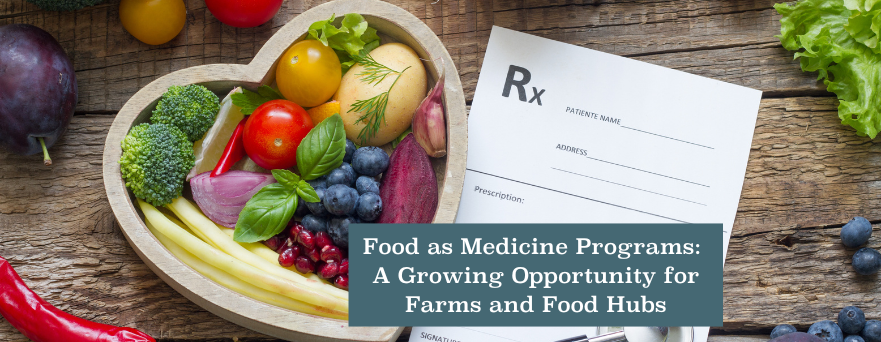
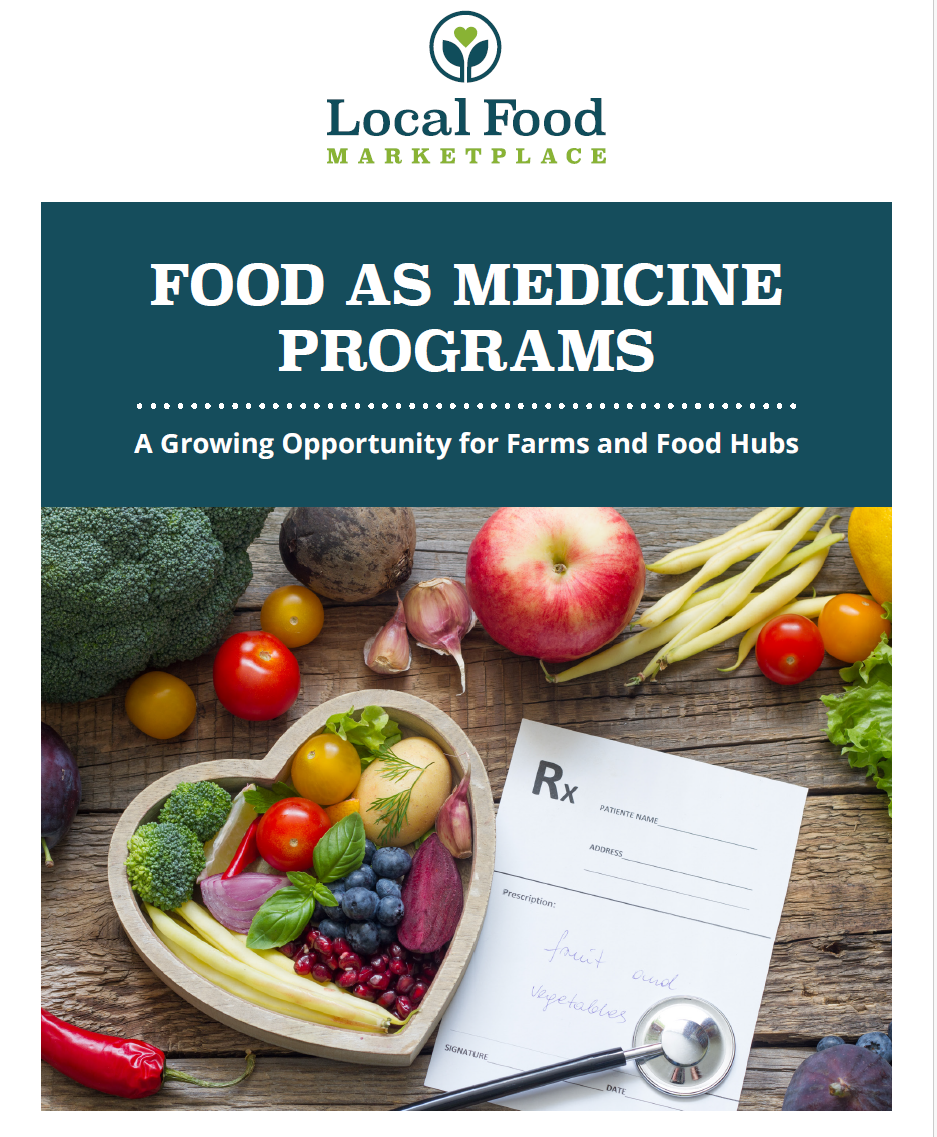
 Food as Medicine goves people access to healthy food to prevent or cure disease. These programs are growing across the country, and they present a real opportunity for farms and food hubs, which have access to the fresh, local foods these programs need.
That’s why we’ve created “Food as Medicine Programs: A Growing Opportunity for Farms and Food Hubs.” Drawing on the expertise of four LFM customers, this free 22-page guide take an in-depth look at how these programs can help your organization.
Among the helpful things you’ll learn:
🥗 What Food as Medicine programs are, why they are growing, and the data that indicates they’re here to stay.
🍇 Why partnerships are critical and what partners to approach if you’re interested in getting involved in a Food as Medicine program.
🍐 Ideas for finding funding and maximizing communication with partners and participants.
🥙 Why a focus on providing quality food is critical to making these programs succeed.
🍌 What resources to check out for more details on Food as Medicine programs.
Download “Food as Medicine Programs: A Growing Opportunity for Farms and Food Hubs” today!
Download the Guide
Meet Our Experts
 Brent Ling, Wholesale Wave
Brent is the Interim Director of Wholesome Wave and manages The National Produce Prescription Collaborative (NPPC), a membership organization that advocates for federal and state policy changes that leverage produce prescriptions as a prevention and intervention for diet-related disease and seeks to further embed these programs into healthcare and food retail systems. Wholesale Wave is one of the leading entities working on produce prescriptions.
 Alicia Fischweicher, Farmshare Austin
Farmshare Austin near Austin, Texas, is a 13-acre organic farm that has been involved in two Food as Medicine programs in the past three years: one serving new mothers and one that (going forward) will focus to youth with chronic diet-related health conditions.
 Erin Martin and Jalen Williams, FreshRx Oklahoma
FreshRx Oklahoma provides people with diabetes with fresh food and educational support to permanently change their eating habits and lifestyle. For one year, each participant receives a box of organic produce every two weeks. They also receive recipes, nutrition and cooking information, and tips on how to stretch their food budget.
I always say, why would we simulate a system that got us sick in the first place with a food as medicine program? We have the opportunity to change the food system at the same time as healing people.”
—Erin Martin, FreshRx Oklahoma
 Susannah Spratt, Feast Down East
Feast Down East runs Food Rx as part of its mobile market service. Participants are referred by a doctor and receive a voucher for $30 per month for produce at the mobile market. The local extension service provides nutrition information and recipes that shoppers can take home with them.
 Ketaurah James, Windy City Harvest
Windy City Harvest in Chicago is part of Chicago Botanic Garden’s urban agriculture program. Its VeggieRx program provides participants referred by their doctor with a box of fresh produce every week. Customers also have access to weekly nutrition lessons and cooking classes.
Sometimes people are getting into (Food as Medicine) for food access, and some people are getting into it for health outcomes and wanting to help change people’s diets. Really get to know the community you want to provide this service for. Come into that community very respectful of people who are getting by with the foods they have access to.”
—Ketaurah James, Windy City Harvest
Preview “Food as Medicine Programs: A Growing Opportunity for Farms and Food Hubs”
The following is the first three pages of “Food as Medicine Programs: A Growing Opportunity for Farms and Food Hubs.” View the entire report here.
Introduction
 Farmers and local food advocates have always known that high-quality, nutrient-dense food is essential to maintaining good health. Now, healthcare systems are finally coming to the same realization and understanding that preventing disease makes more sense (both from a cost and human perspective) than treating conditions that are largely avoidable.
Doctors, insurance providers, and others within the medical community are now embracing the concept of Food as Medicine. This guide explores the role farmers and food hubs can play in these programs — which can include anything from providing food to an existing program to establishing a Food as Medicine partnership in a community. There is a real opportunity in these programs for both local farms and food hubs.
Food as Medicine gives people access to healthy food to prevent or cure disease. Many participants in these services are people living with chronic and preventable conditions such as type 2 diabetes, hypertension, and heart disease. Others are at risk of developing these conditions, or many have a disease that requires maintaining a certain diet. In addition, an important part of many Food as Medicine programs is providing food access to people who are food insecure. People facing food insecurity may not have enough money to purchase food, or they may live in a community with few or no grocery stores, farmers markets, or other places to purchase nutritious foods.
Common Food as Medicine Models
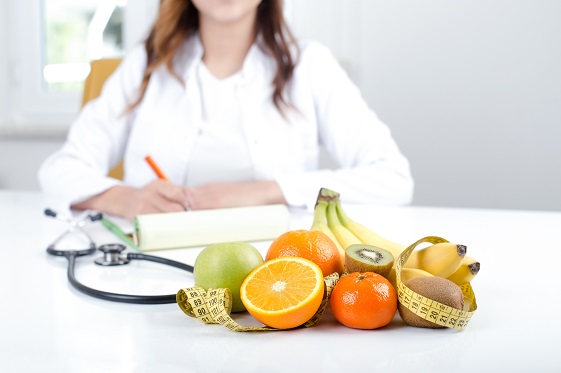
- Produce prescriptions are a medical treatment or preventative service for people with diet-related health risks or conditions, food insecurity, or other barriers to accessing good food. Patients receive a “prescription” from their doctor for whole or minimally processed foods, typically fruits and vegetables. That prescription is filled through a food retailer.
- Medically tailored meals are prepared meals delivered to individuals who live with severe or chronic health conditions. The meals are prepared with guidance from a dietician according to an individual’s specific needs.
- Medically tailored groceries is a similar concept to medically tailored meals, except participants receive groceries or meal kits so they can prepare meals that have been designed by a dietician.
- Nutrition incentives encourage people to purchase more fruits and vegetables. They are usually paired with a program such as SNAP or WIC and provide coupons or discounts to people who buy these healthy foods so they can purchase more.
What are the Benefits for Farms and Food Hubs?
While it can be difficult to quantify the market size of Food as Medicine for farms and food hubs, there are some data points available that demonstrate that Food as Medicine programs are growing and here to stay.
The National Produce Prescription Collaborative (NPPC), which is managed by Wholesome Wave, is a membership organization that advocates for federal and state policy changes that leverage produce prescriptions as a prevention and intervention for diet-related disease and seeks to further embed these programs into healthcare and food retail systems. It estimates there are currently between 250 and 500 produce prescription programs in the United States. The number in Canada is lower but is steadily growing, as it is in the U.S. In 2023, the NPPC had fewer than 50 members. In less than two years, the NPPC has nearly doubled to 92 members and is continuing to add new ones. NPPC is compiling information on the overall market size for produce prescriptions and plans to publish its research later in 2025.
Brent Ling, who manages the NPPC, said he believes produce prescriptions represent the best opportunity for farms and food hubs. Local food producers’ biggest selling point is quality, which can affect health outcomes, and it’s easier to stand out on quality when presenting a raw piece of produce as opposed to including fruits and veggies in a prepared meal. In addition, the organization’s research has shown that the total market for produce prescriptions is bigger than the market for medically tailored meals or groceries, so there is more opportunity.
The Food is Medicine Coalition is a national coalition of nonprofit organizations that provide medically tailored meals and groceries, medical nutrition therapy, and nutrition counseling and education to people living with severe and chronic illnesses. It has 27 partner organizations, most of which focus on medically tailored meals or groceries. These organizations have provided more than 18 million meals or meal equivalents to upwards of 64,000 people.
How Can Farms and Food Hubs Get Involved?
A study by DAISA Enterprises found that farmers markets were the most popular place for participants to redeem their prescriptions, with 49% using vouchers at farmers markets versus 29% using them at grocery stores. Thirty-two percent of programs surveyed used a combination of prescription redemption venues, with other options including CSA shares, mobile markets, and pickup at farms or farmstands. Participants are jumping at the chance to purchase local food when given the opportunity.

As interest in Food as Medicine programs increases, organizers are rethinking where they source their food, and there is a growing interest in purchasing as much local food as possible. Food that hasn’t traveled many miles tends to be fresher and more nutrient dense, which helps participants achieve their desired health outcomes. Advocates also see supporting local farmers as much more aligned with their values.
Any Food as Medicine program can focus on locally sourced products. However, we found that most programs currently working with farms and food hubs are using the produce prescription model. Because many farms and food hubs already offer CSAs and farmshares, produce prescriptions are a natural fit with their operation.
Many food hubs create and manage complex partnerships as part of their work, and so they are a good choice to play a critical role in Food as Medicine programs — including sourcing, distribution, and customer communication.
This guide delves into how food hubs and farms can be strategic about setting up programs that really work — providing themselves with a new profit center and the community with an invaluable service. Download the full guide to learn:
- What program partners are essential for setting up a Food as Medicine program
- Key questions to ask as you get started
- Best practices for maintaining a successful program
- Resources for learning more about Food as Medicine